
One of the first things that always catches my eye when I visit my grandfather’s home is his old typewriter. It sits there, untouched yet full of stories, a quiet reminder of a different era of writing.
On my last visit, I found myself staring at two objects on my desk: my grandfather’s vintage typewriter and my modern laptop. The typewriter, with its ink-stained keys and mechanical rhythm, felt like a relic of patience and craftsmanship. My laptop, sleek and efficient, symbolized the fast-paced digital world I navigate every day.
As I placed my fingers on the typewriter’s keys, I could almost hear the echoes of past words, deliberate and thoughtful. Yet, a glance at the blinking cursor on my laptop reminded me of the contrast. Words flowed effortlessly. Speed was prioritized over reflection.
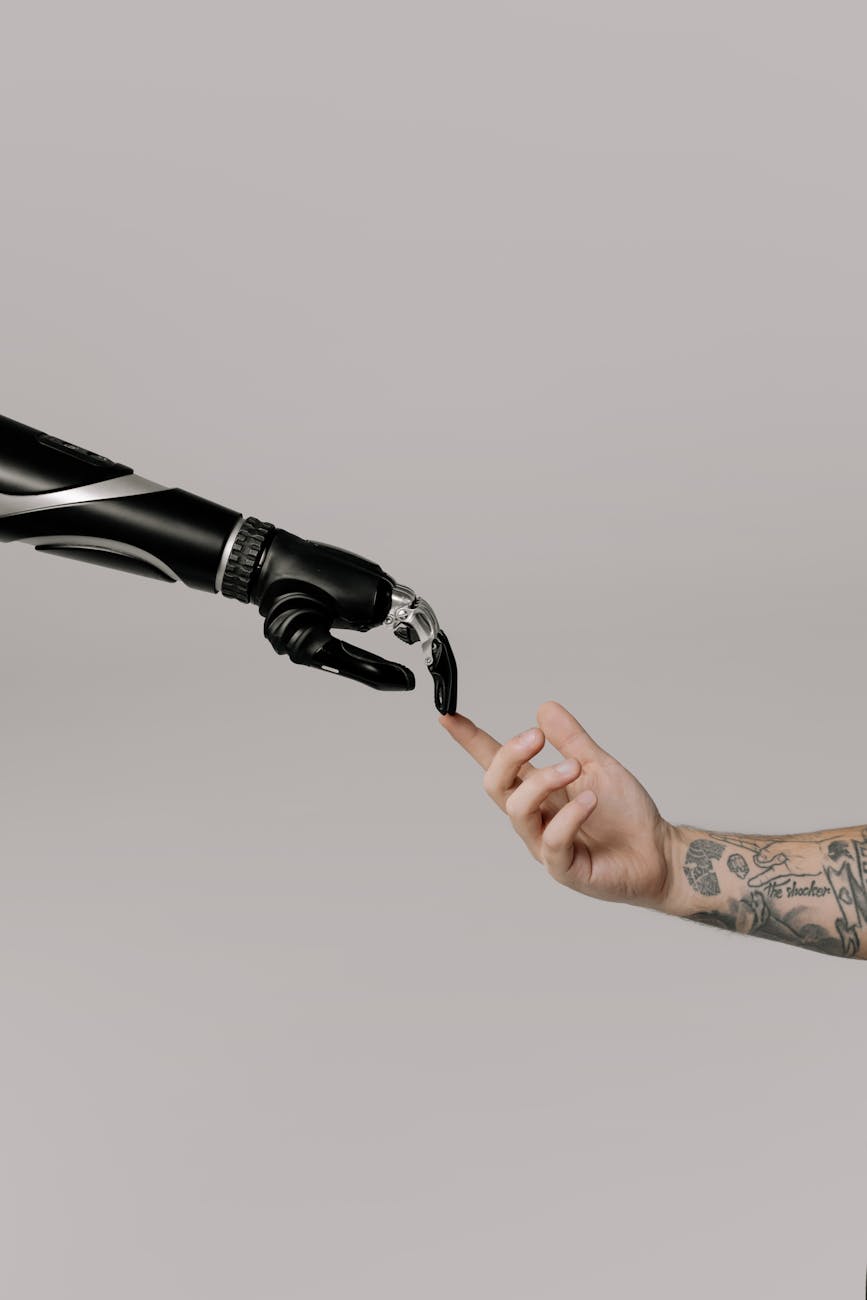
This contrast goes beyond nostalgia. It represents a much larger conversation: the evolving relationship between human creativity and artificial intelligence. How does the way we write—and the tools we use—shape not only our words but our very sense of authenticity and meaning?
Human Touch vs. AI
The other day, I overheard a conversation between two professors at a café. One of them was lamenting how their students were beginning to rely on AI tools to write essays. “It’s not just about getting the work done,” she said, shaking her head. “It’s about the process—about thinking, reflecting, struggling with ideas.”
Her companion nodded in agreement. She added that the university had started mandating more handwritten assignments. They also required in-person exams to combat this new wave of AI dependency.
It reminded me of when I was a student, struggling through late-night essay drafts. Those drafts weren’t just words on a page; they were tiny pieces of me—of my thoughts, my mistakes, my growth. Back then, every word mattered because it felt like I mattered.
Contrast this with a recent meeting I had with a friend who runs a marketing firm. He couldn’t stop raving about how ChatGPT was revolutionizing his business. “We can generate 50 blog posts in a day!” he said proudly. “It’s not about art or authenticity; it’s about results. Faster, cheaper, and better.”
I didn’t know what to say. I could see his point—business is about efficiency, and AI delivers that in abundance. But I couldn’t shake the unease that came with his words. Faster. Cheaper. Better. And, that is for a simple reason: I felt our lives shouldn’t be defined by such banality.
Every time I sit down at my grandfather’s typewriter, it feels like stepping into another world. It’s not fast. It’s not easy. But there’s something about the click-clack of the keys, the way each letter imprints itself onto the page. It feels like a conversation. Writing on it forces me to slow down, to think, to be present.
Yet, when I turn to my laptop, I know I’m giving in to the demands of a world that doesn’t wait for anyone. Deadlines, emails, blog posts—they all demand speed and efficiency. And now, with AI tools, the pace has quickened even further.
It’s hard not to feel like the person choosing the typewriter is being left behind, stuck in some sentimental daydream. But what if that “daydream” holds something we desperately need?
What if slowing down and choosing the harder path is how we stay human in a world driven by algorithms?
The other day, I read an article that I knew instantly had been written by AI. It was polished, sure—efficient, even. But it lacked something I couldn’t quite put into words. Maybe it was vulnerability. Maybe it was soul.
Human writing, at its best, is messy. It’s riddled with quirks and imperfections. Occasionally, it contains a spark of brilliance. This only comes from someone trying to make sense of the world in their own unique way.
And yet, I can’t deny the usefulness of AI. It’s helping businesses thrive and reduce burnout for overworked writers. It’s too easy for us to take for granted the usefulness of AI for our mental health.
We can never fully measure how much AI writing tools have reduced workplace stress. These tools have improved work-life balance. They have also freed us from unnecessary drudgery.
The question isn’t whether we should use AI or reject it—it’s about balance. It’s about finding a way to preserve the messiness of human creativity while embracing the efficiency of AI.
The Road Ahead
As I sit here, looking at the typewriter and the laptop, I know the choice isn’t really between the two. It’s about remembering what matters most in the act of creation. AI is a tool, just like the typewriter, just like the computer. But tools are only as good as the hands that use them.
So maybe the real challenge isn’t AI itself—it’s us. It’s about holding onto our humanity while the world races ahead. It’s about reminding ourselves that writing is more than just words on a screen.
More than that, it’s a way of connecting, questioning, and being fully—albeit imperfectly—human.
This article was originally published on Vocal Media and has been adapted for the blog.
Stay tuned for our upcoming articles, where we’ll dive deeper into simple wellness habits that can transform your daily routine. We’ll also explore more actionable tips to help you thrive in all areas of your life.


 The Balanced Path
I’d love to hear your thoughts! Share your comments below